
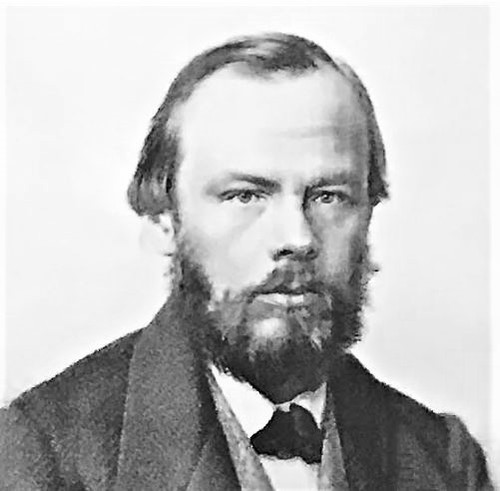
Fyodor Dostoevsky portrait

Fyodor Dostoevsky

Books on Dogeared: 1

Readers: 1 · Shelf entries: 1

Russian novelist Fyodor Mikhailovitch Dostoyevsky was a journalist and short-story writer, whose psychological penetration into the human soul profoundly influenced the 20th century novel. Dostoevsky's novels have much autobiographical elements, but ultimately they deal with moral and philosophical questions. He presented interacting characters with contrasting views or ideas about freedom of choice, Socialism, atheisms, good and evil, happiness and so forth. Dostoevsky's central obsession was God, whom his characters constantly search through painful errors and humiliations. ([Source][1]) Dostoyevsky's literary output explores human psychology in the troubled political, social and spiritual context of 19th-century Russian society. Considered by many as a founder or precursor of 20th-century existentialism, his *Notes from Underground* (1864), written in the embittered voice of the anonymous "underground man", was called by Walter Kaufmann the "best overture for existentialism ever written." A prominent figure in world literature, Dostoyevsky is often acknowledged by critics as one of the greatest psychologists in world literature. ([Source][2]) Фёдор Миха́йлович Достое́вский (рус. дореф. Ѳедоръ Михайловичъ Достоевскій; 30 октября [11 ноября] 1821, Москва, Российская империя — 28 января [9 февраля] 1881, Санкт-Петербург, Российская империя) — русский писатель, мыслитель, философ и публицист. Член-корреспондент Петербургской АН с 1877 года. ([Source][3]) Как в начале, так и в продолжении своего литературного творчества после четырёх лет каторги и ссылки за участие в кружке Петрашевского Достоевский выступал в качестве новатора в русле традиций русского реализма, что не получило должной оценки современников при жизни писателя. ([Source][3]) После смерти Достоевский был признан классиком русской литературы и одним из лучших романистов мирового значения, считается первым представителем персонализма в России. Творчество русского писателя оказало воздействие на мировую литературу, в частности, на творчество ряда лауреатов Нобелевской премии по литературе, на становление экзистенциализма и фрейдизма. ([Source][3]) К наиболее значительным произведениям писателя относятся романы «великого пятикнижия». Романы «Преступление и наказание», «Идиот», «Бесы» и «Братья Карамазовы» включены в список 100 лучших книг Норвежского книжного клуба 2002 года. Многие известные произведения Достоевского многократно экранизировались и инсценировались в театре, ставились балетные и оперные постановки. ([Source][3]) [1]: http://www.kirjasto.sci.fi/fdosto.htm [2]: http://en.wikipedia.org/wiki/Fyodor_Dostoyevsky [3]: https://ru.wikipedia.org/wiki/%D0%94%D0%BE%D1%81%D1%82%D0%BE%D0%B5%D0%B2%D1%81%D0%BA%D0%B8%D0%B9,_%D0%A4%D1%91%D0%B4%D0%BE%D1%80_%D0%9C%D0%B8%D1%85%D0%B0%D0%B9%D0%BB%D0%BE%D0%B2%D0%B8%D1%87 Source: Open Library

Books

  • The House of the Dead cover

    Not on Shelf

    The House of the Dead

    by Fyodor Dostoevsky

    Readers: 1 · Shelf entries: 1

    Pages: 247

    Literary

    No ratings yet.

    "The House of the Dead" is a novel written by the Russian author Fyodor Dostoevsky. It was first published in 1861. The novel is based on Dostoevsky's own experiences as a political prisoner in a Siberian labor camp. It is narrated by the character Alexander Petrovich Goryanchikov, who is a fictionalized version of Dostoevsky. The story provides a vivid and often harrowing account of life in the Siberian penal colony, where the inmates are subjected to brutal treatment and harsh conditions. "The House of the Dead" is known for its exploration of the psychological and social effects of imprisonment and exile. It delves into themes of suffering, redemption, and the resilience of the human spirit. The novel is significant for its realistic portrayal of the life of convicts in 19th-century Russia and for its insights into the human condition.

    Continue reading
Support Dogeared